About 50/50
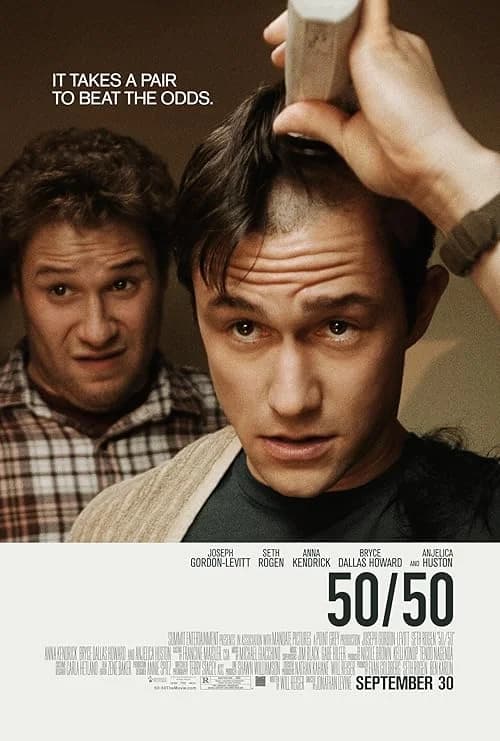
50/50 is a remarkable 2011 comedy-drama that masterfully balances humor with profound emotional depth. Inspired by screenwriter Will Reiser's real-life experience, the film follows 27-year-old Adam (Joseph Gordon-Levitt) who receives a shocking diagnosis of a rare spinal cancer with a 50% survival rate. The narrative explores his journey through treatment, supported by his crude but loyal best friend Kyle (Seth Rogen), his overbearing mother (Anjelica Huston), and a young therapist-in-training (Anna Kendrick).
Director Jonathan Levine navigates the delicate subject matter with exceptional sensitivity, never trivializing the seriousness of cancer while finding authentic moments of levity in human connection. Gordon-Levitt delivers a career-defining performance, portraying Adam's vulnerability, anger, and resilience with remarkable subtlety. The chemistry between him and Rogen feels genuine, reflecting real friendship dynamics during crisis.
What makes 50/50 particularly compelling is its refusal to sentimentalize the cancer experience. Instead, it presents an honest, sometimes messy portrayal of how people cope with mortality. The film's strength lies in its authenticity—the awkward conversations, the inappropriate jokes that actually help, and the quiet moments of realization. Viewers should watch this film not just for its excellent performances and sharp writing, but for its life-affirming message about finding connection and humor even in life's most challenging circumstances. It's a testament to human resilience that will make you laugh, cry, and appreciate the complexities of friendship and family.
Director Jonathan Levine navigates the delicate subject matter with exceptional sensitivity, never trivializing the seriousness of cancer while finding authentic moments of levity in human connection. Gordon-Levitt delivers a career-defining performance, portraying Adam's vulnerability, anger, and resilience with remarkable subtlety. The chemistry between him and Rogen feels genuine, reflecting real friendship dynamics during crisis.
What makes 50/50 particularly compelling is its refusal to sentimentalize the cancer experience. Instead, it presents an honest, sometimes messy portrayal of how people cope with mortality. The film's strength lies in its authenticity—the awkward conversations, the inappropriate jokes that actually help, and the quiet moments of realization. Viewers should watch this film not just for its excellent performances and sharp writing, but for its life-affirming message about finding connection and humor even in life's most challenging circumstances. It's a testament to human resilience that will make you laugh, cry, and appreciate the complexities of friendship and family.