About Twice in a Lifetime
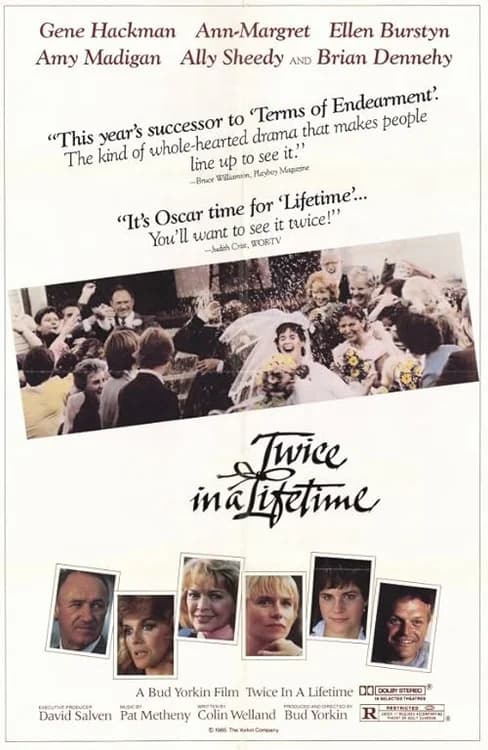
Twice in a Lifetime (1985) is a poignant family drama that explores the complex emotional fallout when a middle-aged man disrupts his seemingly stable life. The film follows Harry Mackenzie, a 50-year-old steelworker played with remarkable authenticity by Gene Hackman, who begins an extramarital relationship that sends shockwaves through his family. What begins as a personal awakening for Harry becomes a source of profound pain for his wife of thirty years, Kate (Ellen Burstyn), and creates uncomfortable divisions among their grown children.
Directed by Bud Yorkin, the film excels in its nuanced portrayal of family dynamics and moral ambiguity. Hackman delivers one of his most underrated performances, capturing both the exhilaration of new love and the guilt of betrayal. Ellen Burstyn is equally compelling as the wounded wife grappling with shattered trust, while Amy Madigan and Ally Sheedy shine as daughters caught between loyalty to their mother and understanding their father's perspective.
What makes Twice in a Lifetime particularly worth watching is its refusal to offer easy answers or moral judgments. The film presents each character's viewpoint with empathy, allowing viewers to understand the motivations behind painful choices. The authentic dialogue and natural performances create a deeply human story that resonates decades later. For anyone interested in mature dramas about relationships, family conflicts, and the difficult choices people make, this film offers thoughtful, emotionally rich storytelling that avoids melodrama in favor of genuine human complexity.
Directed by Bud Yorkin, the film excels in its nuanced portrayal of family dynamics and moral ambiguity. Hackman delivers one of his most underrated performances, capturing both the exhilaration of new love and the guilt of betrayal. Ellen Burstyn is equally compelling as the wounded wife grappling with shattered trust, while Amy Madigan and Ally Sheedy shine as daughters caught between loyalty to their mother and understanding their father's perspective.
What makes Twice in a Lifetime particularly worth watching is its refusal to offer easy answers or moral judgments. The film presents each character's viewpoint with empathy, allowing viewers to understand the motivations behind painful choices. The authentic dialogue and natural performances create a deeply human story that resonates decades later. For anyone interested in mature dramas about relationships, family conflicts, and the difficult choices people make, this film offers thoughtful, emotionally rich storytelling that avoids melodrama in favor of genuine human complexity.