About Yojimbo
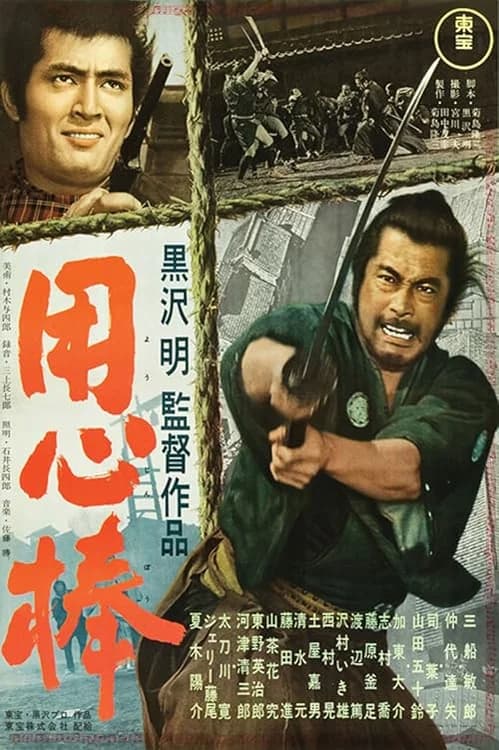
Akira Kurosawa's 1961 masterpiece Yojimbo stands as one of cinema's most influential action films, featuring Toshiro Mifune's iconic performance as a cunning ronin who arrives in a town torn apart by two rival criminal factions. With no allegiance to either side, the nameless samurai strategically plays the gangs against each other, exploiting their greed and violence in a calculated bid to liberate the town from their grip. This brilliant narrative of manipulation and moral ambiguity unfolds with Kurosawa's signature visual precision, combining dynamic cinematography with tightly choreographed action sequences that have become benchmarks of the genre.
Mifune's portrayal of the world-weary yet razor-sharp warrior remains a career highlight, embodying both physical prowess and psychological depth as he navigates the town's corrupt landscape. Kurosawa's direction masterfully balances dark humor with tense drama, creating a film that feels simultaneously timeless and revolutionary in its storytelling approach. The atmospheric score by Masaru Sato complements the film's escalating tension, while the production design immerses viewers in a vividly realized feudal Japan where every dusty street and shadowy alley tells a story.
Viewers should watch Yojimbo not only for its historical significance as the film that inspired Sergio Leone's A Fistful of Dollars and countless other Westerns, but for its enduring entertainment value and artistic achievement. The film's exploration of moral complexity, its groundbreaking anti-hero protagonist, and its perfectly paced narrative continue to resonate with modern audiences. Whether you're a fan of samurai cinema, classic filmmaking, or simply compelling storytelling, Yojimbo offers a viewing experience that remains as sharp and impactful today as when it first revolutionized world cinema over six decades ago.
Mifune's portrayal of the world-weary yet razor-sharp warrior remains a career highlight, embodying both physical prowess and psychological depth as he navigates the town's corrupt landscape. Kurosawa's direction masterfully balances dark humor with tense drama, creating a film that feels simultaneously timeless and revolutionary in its storytelling approach. The atmospheric score by Masaru Sato complements the film's escalating tension, while the production design immerses viewers in a vividly realized feudal Japan where every dusty street and shadowy alley tells a story.
Viewers should watch Yojimbo not only for its historical significance as the film that inspired Sergio Leone's A Fistful of Dollars and countless other Westerns, but for its enduring entertainment value and artistic achievement. The film's exploration of moral complexity, its groundbreaking anti-hero protagonist, and its perfectly paced narrative continue to resonate with modern audiences. Whether you're a fan of samurai cinema, classic filmmaking, or simply compelling storytelling, Yojimbo offers a viewing experience that remains as sharp and impactful today as when it first revolutionized world cinema over six decades ago.